



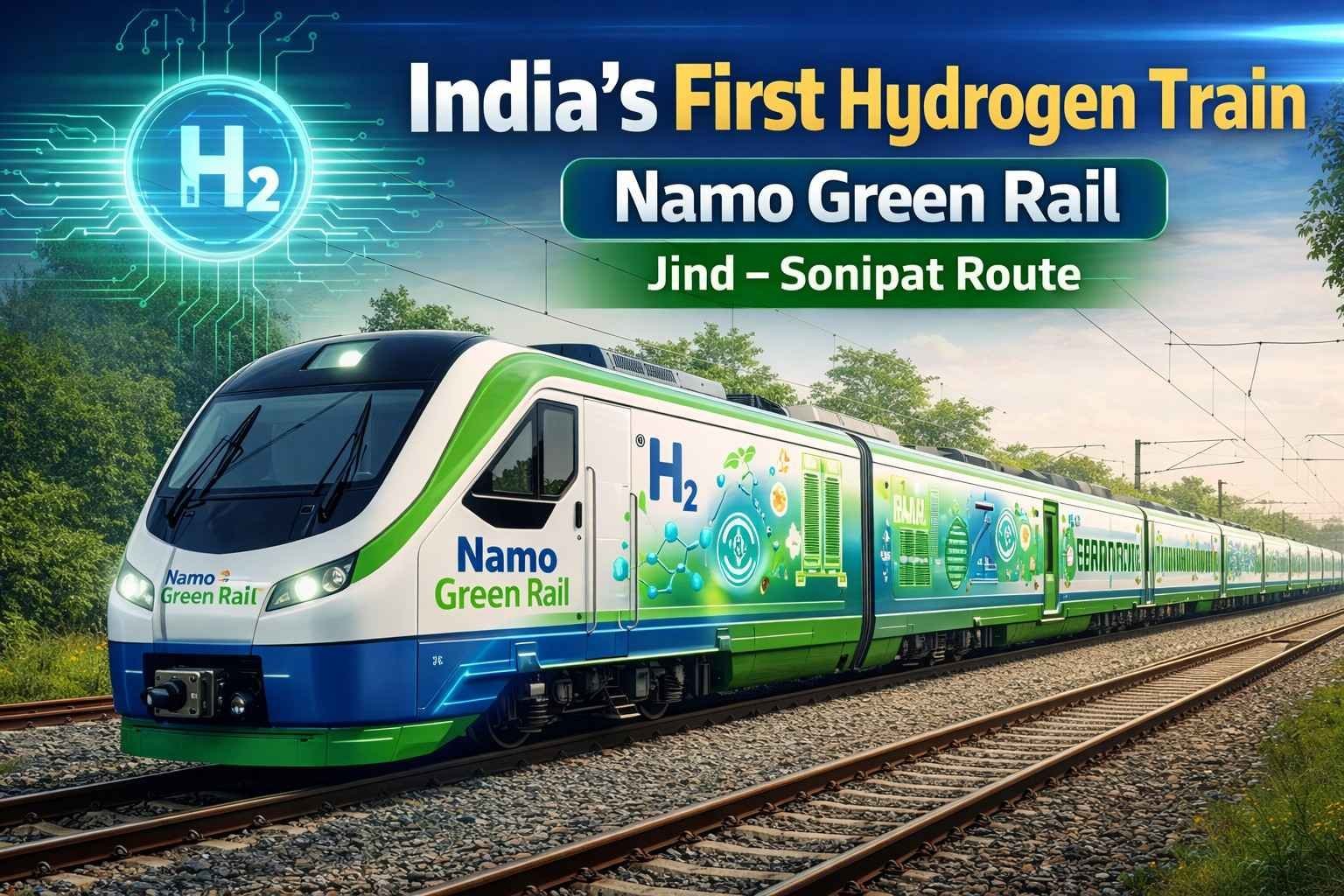
New Delhi, July 18, 2026: India has entered a new era of sustainable transportation with the launch of its first hydrogen-powered passenger train. Prime Minister Narendra Modi flagged off the country’s inaugural hydrogen train, placing India among a select group of nations that have adopted hydrogen fuel technology for rail transport. The initiative represents a significant step toward reducing carbon emissions and promoting clean energy in one of the world’s largest railway networks.
The newly launched train operates using hydrogen fuel cells, a technology that generates electricity through a chemical reaction between hydrogen and oxygen. Unlike conventional diesel-powered locomotives, the train emits only water vapor, making it an environmentally friendly alternative for rail transportation. Officials believe the project will play an important role in helping Indian Railways achieve its long-term goal of reducing greenhouse gas emissions while improving operational efficiency.
Indian Railways, which carries millions of passengers every day, has been working to modernize its infrastructure through electrification, renewable energy integration, and advanced technologies. The introduction of hydrogen-powered trains adds another dimension to these modernization efforts. Railway officials stated that hydrogen technology is particularly suitable for routes where complete electrification may not be economically feasible or technically practical.
During the inauguration ceremony, Prime Minister Modi described the launch as a historic achievement for the country’s transportation sector. He emphasized that India is committed to becoming a global leader in green mobility and sustainable development. According to the government, investments in clean transportation technologies will not only reduce pollution but also generate new employment opportunities in hydrogen production, engineering, maintenance, and manufacturing.
Experts believe hydrogen-powered transportation has the potential to transform India’s mobility sector over the next decade. Unlike diesel engines, hydrogen fuel cells operate quietly and produce zero harmful emissions during operation. This makes them suitable for environmentally sensitive regions, tourist destinations, and densely populated urban areas where air quality remains a major concern.
The hydrogen fuel used by these trains is expected to be increasingly sourced from renewable energy projects. Green hydrogen, produced through the electrolysis of water using renewable electricity, is considered one of the most promising clean fuels for the future. India has already announced ambitious plans under its National Green Hydrogen Mission to become a major producer and exporter of green hydrogen.
Industry analysts note that while hydrogen-powered transportation requires significant initial investment, long-term operational benefits could outweigh the costs. Advances in fuel cell technology, falling renewable energy prices, and government incentives are expected to improve the commercial viability of hydrogen-based transportation systems over time.
The railway sector is one of India’s largest consumers of energy. Replacing diesel-powered trains with hydrogen-powered alternatives can significantly reduce dependence on imported fossil fuels. The move also supports India’s climate commitments under international agreements aimed at limiting global warming and achieving net-zero carbon emissions in the coming decades.
Apart from environmental benefits, the project is expected to strengthen India’s domestic manufacturing ecosystem. Components such as fuel cells, hydrogen storage systems, power electronics, and specialized railway equipment are likely to create new opportunities for Indian industries under the “Make in India” initiative. Several public and private companies are already investing in hydrogen research and infrastructure.
Challenges remain, however. Experts point out that hydrogen production, storage, transportation, and refueling infrastructure must expand rapidly before large-scale deployment becomes possible. Safety standards, technical training, and reliable supply chains will also be critical for the successful adoption of hydrogen technology across the railway network.
Despite these challenges, the launch has received positive responses from environmental organizations and transportation experts. Many believe it demonstrates India’s willingness to invest in future-ready technologies while balancing economic growth with environmental responsibility.
The government has indicated that the success of the pilot project will determine future expansion plans. If operational performance meets expectations, additional hydrogen-powered trains could be introduced on selected routes across different states in the coming years. Such expansion would further strengthen India’s position as a leader in sustainable public transportation.
The inauguration of the country’s first hydrogen-powered train symbolizes more than just technological progress. It reflects India’s broader vision of building cleaner infrastructure, reducing dependence on fossil fuels, and embracing innovation to meet the transportation needs of a growing economy. As hydrogen technology continues to evolve, the railway sector may become one of the biggest beneficiaries of India’s transition toward a greener future.