


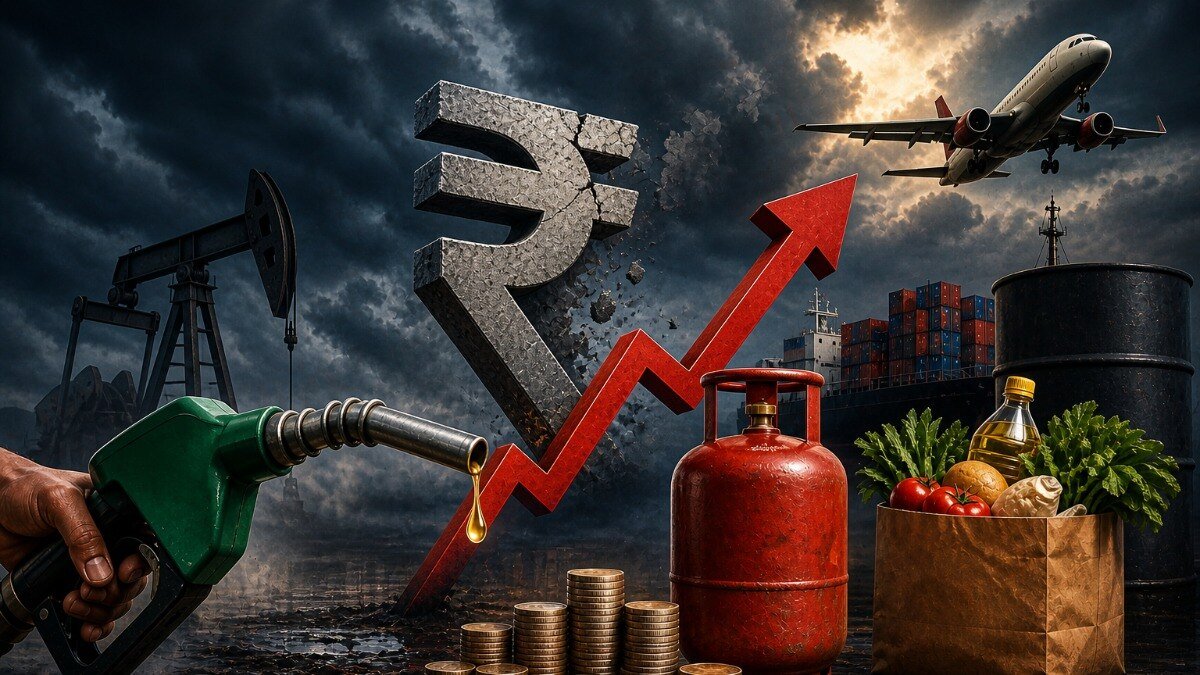
New Delhi: Rising inflation is putting increasing pressure on Indian households, with the impact of the ongoing West Asia conflict now being felt far beyond fuel markets. Higher energy costs and rising prices of essential goods are reducing consumers’ purchasing power, raising concerns that household spending may slow in the coming months.
The effects of inflation first became evident earlier this year when industrial areas across Delhi-NCR witnessed widespread worker protests. Employees from several manufacturing units raised concerns over long working hours, low wages, and poor working conditions. Their frustration was further fueled by the steep rise in the prices of cooking gas and essential commodities, making it difficult for low-income families to manage daily expenses.
Several state governments later revised minimum wages following the demonstrations, but inflation has continued to outpace income growth for many households.
West Asia Conflict Driving Costs Higher
The ongoing geopolitical tensions in West Asia have disrupted global energy supplies, pushing up fuel prices and increasing transportation and manufacturing costs. Liquefied Petroleum Gas (LPG) prices witnessed a sharp rise during the peak of the crisis, while reports also indicated black-market shortages in certain areas.
As fuel becomes more expensive, manufacturers are facing higher production costs, forcing many companies to increase the prices of everyday products.
Everyday Essentials Becoming More Expensive
Consumers across the country are now paying more for several essential household items.
Recent price increases include:
- Milk prices have increased by ₹2 per litre.
- Hindustan Unilever (HUL) has raised detergent prices by 5% to 11%.
- Britannia Industries has indicated further price hikes after reporting nearly a 20% increase in fuel and packaging costs.
- Dabur India has increased prices across several oral care and hair care products.
- Consumer durables, including air conditioners and other appliances, have also become costlier due to higher raw material and logistics expenses.
Industry experts say companies have been absorbing rising costs for months, but sustained inflation is forcing them to pass the burden on to consumers.
Household Budgets Under Pressure
The continuous increase in prices is affecting families across income groups, particularly middle-class and lower-income households. A larger share of monthly income is now being spent on food, fuel, transportation, and utility bills, leaving less money available for discretionary spending such as electronics, clothing, travel, and entertainment.
Economists warn that if inflation remains elevated, consumer demand could weaken significantly. Since private consumption contributes a major share of India’s economic growth, slower spending could impact manufacturing, retail, and services sectors.
Businesses Watching Consumer Demand
Fast-moving consumer goods (FMCG) companies are closely monitoring buying patterns. Many firms have already introduced smaller pack sizes or gradual price increases to reduce the immediate impact on consumers.
Retail analysts believe that while demand for essential goods is likely to remain stable, sales of premium and non-essential products may witness slower growth if inflation persists.
Government and RBI Monitoring Situation
The government and the Reserve Bank of India (RBI) continue to monitor inflation trends closely. Policymakers are expected to focus on controlling food inflation, ensuring adequate fuel supplies, and maintaining price stability without hurting economic growth.
Experts believe that easing global crude oil prices and improved supply chains could provide some relief. However, prolonged geopolitical tensions may continue to keep inflationary pressures elevated.
Outlook
For millions of Indian households, rising prices have become a daily concern. From grocery bills to transportation expenses, the cost of living continues to increase, forcing families to reconsider spending habits. While wage revisions have offered some support to workers, inflation remains a significant challenge, and the coming months will be crucial in determining whether consumer spending can withstand continued price pressures.